
Superseding the boards of two non-banking financial companies (NBFCs) in the Srei group will neither create liquidity challenges for sound entities, nor build systemic crises because the markets have factored in the problems with the Kolkata-based firms. Such regulatory steps will help in making the NBFC space more robust, bankers and market experts said. The action should have begun earlier because the Reserve Bank of India (RBI) had done a special audit last financial year and asked the group to make provisions for assets considered stressed, analysts said.

Mutliplexes want the gap between a film's release in theatres and on OTT to be doubled from 4 to 8 weeks.
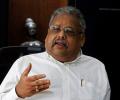
In the season of aviation action, Rakesh Jhunjhunwala-backed Akasa Air has secured the crucial no-objection certificate (NoC) from the civil aviation ministry. It expects to start operations next summer. The airline will now have to apply for the Directorate General of Civil Aviation for operations permit. Aviation sector has been in the limelight with the Tata Group winning the Air India bid last week.

'It is going to be extremely rapid and anybody who is not there, be it investor, manufacturer, supplier, will miss out.'

In what is amongst the first focused fund in the space, India Media Entertainment Fund (IMEF) is raising Rs 500 crore, which will provide both equity as well as instruments like non-convertible debentures (NCD) to companies in the content, distribution platform and services areas. The private equity fund has appointed a high-profile advisory body which includes ad guru Prahlad Kakkar, managing director of Red Chillies Entertainment and cricket team KKR Sports, actress and entrepreneur Raadhika Sarathkumar, who has starred in Malayalam, Hindi and Kannada films and runs Radaan Mediaworks. It also includes Ramnath Pradeep, former chairman and managing director of Corporation Bank, and Rajesh Gupta, senior partner of law firm SNG Partners.

'The opening up of theatres is well-timed to coincide with the festival season and give a big push. We expect box office collections to reach 2019 levels when they stood at Rs 10,000 crore.' Surajeet Das Gupta reports.

Ahead of two crucial audits, the Ministry of Civil Aviation (MoCA) has proposed to allow deputy director generals (DGs) and officers of Indian Air Force (IAF) to apply for the post of chief of India's aviation regulator. The current head of the Directorate General of Civil Aviation (DGCA), Arun Kumar, has been promoted as secretary and is expected to move out some time soon. DGCA has four Deputy DGs with experience in different fields of aviation.

Vodafone plc has made it clear that it will not make any fresh equity infusion in its Indian telecom business--Vodafone Idea Ltd (VIL). Responding to a query, a spokesperson at the UK-headquartered telco said: "Just to confirm our position, there will be no new equity infusion from Vodafone Group." This is the first time that Vodafone has spoken about its stand after the government announced a telecom package.

India's largest public sector bank State Bank of India (SBI) will support Tata group's bid for soon-to-be-privatised Air India by subscribing to Tata Sons debentures or funding the special purpose vehicle (SPV) set up by Tata Sons for the acquisition. Bankers said the credit rating of Tata group's holding company is "AAA" signifying high safety and a combination of Air India with its existing airline businesses would make it a formidable player - leading to a duopoly market with IndiGo. It would also open many business opportunities, including in the retail segment, an official said.

The Deposit Insurance and Credit Guarantee Corporation (DICGC) will pay the depositors of 21 stressed cooperative banks, including the Punjab & Maharashtra Co-Operative Bank (PMC Bank), up to Rs 5 lakh within 90 days. The Reserve Bank of India (RBI) had imposed restrictions on the withdrawal of deposits from these banks. Of the 21 banks, 11 are from Maharashtra, five from Karnataka, and one each from Uttar Pradesh, Kerala, Rajasthan, Madhya Pradesh, and Punjab.
'There is no doubt at all that Jio's disruption of the mobile broadband market was a turning point for India's digital economy.'

In order to gauge the financial impact of COVID-19 on the aviation industry, comparing it to what happened after the 9/11 terrorist attack is a helpful yardstick.

Eighteen months after the government started banning Chinese mobile apps, two distinct changes have occurred in the country's mobile app sweepstakes. The move has given a thrust to domestic app publishers, especially in certain segments and it has dramatically reduced the market share of Chinese apps. What started as an interim government ban on 59 Chinese apps, including the highly popular TikTok and WeChat in March 2020 ended as a permanent ban on many of them in January this year. According to a China Internet Report 2021 (by South China Morning Post), the market share of Chinese apps in India has dropped substantially from 44 per cent in 2018 to only 29 per cent in 2020. In 2017 it was 41 per cent.

From powering mobile devices, US chip designer Qualcomm has tied up with Ola Electric to power its electric scooters. Qualcomm is providing the key 4G connected octa core android platform which provides connectivity, computing capabilities and enables rich immersive displays with power saving software.

Palo Alto-based electric carmaker Tesla has initiated talks with the government on the modalities of setting up fully-owned retail outlets. The company needs to comply with the foreign direct investment (FDI) guidelines related to single-brand retail, including local sourcing norms, to sell directly in India. At least two other foreign majors - Apple and Ikea - were engaged in talks with the government long before the sourcing norms were eased under the single-brand retail route.

When, recently, Bharti Airtel announced a Rs 21,000 crore rights issue, analysts pointed out that its structure was similar to that of Reliance's issue in June 2020. One similarity is that shareholders in both companies have to pay only 25 per cent of the money on application. The rest is to be paid in two tranches. In Bharti Airtel's case, it is within 36 months; in Reliance Jio's, it is within 17 months.

In a major push towards 'Make in India', Apple Inc is manufacturing 70 per cent of the mobile phones, in value terms, that it sells in the domestic market, in India, according to sources aware of the development. This is a sharp rise from the figure of 30 per cent just two years ago and marks a major shift in Apple's strategy following the government's Production Linked Incentive (PLI) scheme that kicked off in FY'21. One of Apple's three vendors here, Foxconn, is currently manufacturing the best-selling model, the Apple 11, along with the Apple 10 and the Apple 12. Another contract manufacturer, Wistron, makes the Apple SE 2020. (The third, Pegatron, has yet to start production). The only models that are imported (they have limited volumes but high value) are the Apple 12 Pro and Pro Max.

The Chinese government is imposing severe restrictions on their tech companies - whether it is on data security, marketing practices or floating an IPO. Should this be music to the ears of Indian start-ups and home-grown private equity (PE) funds? Ask Indian start-ups and the answer is a resounding "yes".

India's biggest car maker Maruti Suzuki said on Tuesday that its vehicle production in September will tumble by 60 per cent due to chip shortage. The company, which had earlier cut down production at its Gujarat plant, said the chip shortage will hit production in Gurugram and Manesar plants, effectively forcing the automaker to cut production by 60 per cent. Owing to a supply constraint of electronic components due to semiconductor shortage, the company is expecting an adverse impact on vehicle production in September in both Haryana and its contract manufacturing company, Suzuki Motor Gujarat Pvt Ltd. (SMG) in Gujarat.

India's first home-grown mapping company MapMyIndia is looking to list in the public market by raising around Rs 1,200 crore at a Rs 6,000-crore valuation. Sources said the company is ready with its draft red herring prospectus documents and is likely to file as early as next week. While the money will be used for business expansion, it will also give MapMyIndia's early investors, including Qualcomm, PhonePe, and Japanese mapmaker Zenrin Co., a chance to exit. The Verma family, which founded the company, will continue to remain promoters.
 © 2026 Rediff.com - Investor Information - Advertise with us - Disclaimer - Privacy Policy - Sitemap - Feedback - About us - Terms of use - Grievances